

pro $24.99 per month
- access to all Manning books, MEAPs, liveVideos, liveProjects, and audiobooks!
- choose one free eBook per month to keep
- exclusive 50% discount on all purchases
- renews monthly, pause or cancel renewal anytime
lite $19.99 per month
- access to all Manning books, including MEAPs!
team
5, 10 or 20 seats+ for your team - learn more

Look inside
Everything you need to know about using the tools, libraries, and models at Hugging Face—from transformers, to RAG, LangChain, and Gradio.
Hugging Face in Action reveals how to get the absolute best out of everything Hugging Face, from accessing state-of-the-art models to building intuitive frontends for AI apps.
With Hugging Face in Action you’ll learn:
Want a cutting edge transformer library? Hugging Face’s open source offering is best in class. Need somewhere to host your models? Hugging Face Spaces has you covered. Do your users need an intuitive frontend for your AI app? Hugging Face’s Gradio library makes it easy to build UI using the Python skills you already have. In Hugging Face in Action you’ll learn how to take full advantage of all of Hugging Face’s amazing features to quickly and reliably prototype and productionize AI applications.
Hugging Face in Action reveals how to get the absolute best out of everything Hugging Face, from accessing state-of-the-art models to building intuitive frontends for AI apps.
With Hugging Face in Action you’ll learn:
- Utilizing Hugging Face Transformers and Pipelines for NLP tasks
- Applying Hugging Face techniques for Computer Vision projects
- Manipulating Hugging Face Datasets for efficient data handling
- Training Machine Learning models with AutoTrain functionality
- Implementing AI agents for autonomous task execution
- Developing LLM-based applications using LangChain and LlamaIndex
- Constructing LangChain applications visually with LangFlow
- Creating web-based user interfaces using Gradio
- Building locally running LLM-based applications with GPT4ALL
- Querying local data using Large Language Models
Want a cutting edge transformer library? Hugging Face’s open source offering is best in class. Need somewhere to host your models? Hugging Face Spaces has you covered. Do your users need an intuitive frontend for your AI app? Hugging Face’s Gradio library makes it easy to build UI using the Python skills you already have. In Hugging Face in Action you’ll learn how to take full advantage of all of Hugging Face’s amazing features to quickly and reliably prototype and productionize AI applications.
about the technology
Hugging Face is an incredible open-source ecosystem for AI engineers and data scientists, providing hundreds of pre-trained models, datasets, tools, and libraries. It’s also a central hub for collaborating on leading edge AI research. Hugging Face is a massive platform, and this book will help you take full advantage of all it has to offer.about the book
Hugging Face in Action teaches you how to build end-to-end AI systems using resources from the Hugging Face community. In it, you’ll create multiple projects, including an object detection model, a RAG Q&A application, an LLM-powered chatbot, and more. You’ll appreciate the clear, accessible explanations, along with thoughtful introductions to key technologies like LangChain, LlamaIndex, and Gradio.what's inside
- How to navigate the huge Hugging Face library of models and tools
- How to run LLMs locally using GPT4ALL
- How to create web-based user interfaces using Gradio
- How to improve models using Hugging Face datasets
concepts explained in this book
- Gradio is an open-source Python library for rapidly building interactive web interfaces and demonstrations for machine-learning models and applications.
- GPT4All is an open-source software ecosystem for running and interacting with language models locally on consumer or organizational hardware.
- LangGraph is a framework for building stateful, graph-structured workflows and applications, including those involving language models and agents.
- A template is a reusable structure with fixed elements and variable parts for creating or organizing instances of similar content or artifacts.
- An MCP server is a software component that implements the Model Context Protocol to expose tools, data, or other capabilities to compatible clients.
- Hugging Face Transformers is an open-source software library for loading, using, and training pretrained transformer models across machine-learning tasks.
- A language model is a computational model that represents patterns in linguistic sequences to assign probabilities, predict, generate, or evaluate language.
- A software tool is a capability or utility that enables a person or system to perform a defined task or operation.
related titles
related titles
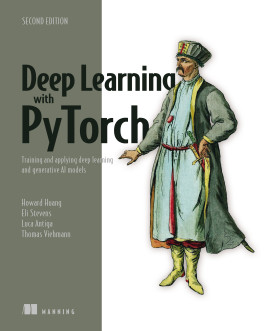
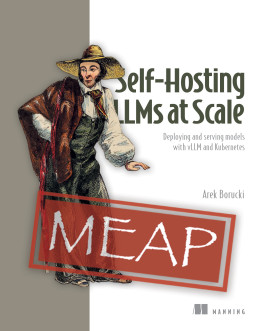
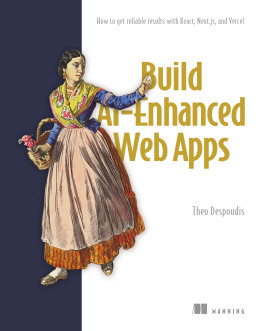


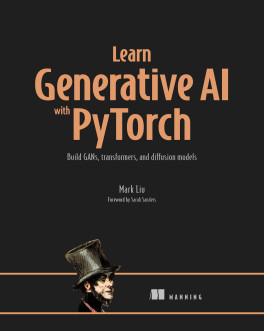





choose your plan
pro
monthly
annual
$24.99
$249.99
only $20.83 per month
- access to all Manning books, MEAPs, liveVideos, liveProjects, and audiobooks!
- choose another free product every time you renew
- choose twelve free products per year
- exclusive 50% discount on all purchases
- renews monthly, pause or cancel renewal anytime
- renews annually, pause or cancel renewal anytime
-
![Hugging Face in Action]() Hugging Face in Action ebook for free
 Hugging Face in Action ebook for free
team
monthly
annual
$49.99
$499.99
only $41.67 per month
- five seats for your team
- access to all Manning books, MEAPs, liveVideos, liveProjects, and audiobooks!
- choose another free product every time you renew
- choose twelve free products per year
- exclusive 50% discount on all purchases
- renews monthly, pause or cancel renewal anytime
- renews annually, pause or cancel renewal anytime
-
![Hugging Face in Action]() Hugging Face in Action ebook for free
choose your plan
pro
monthly
annual
$24.99
$249.99
only $20.83 per month
- access to all Manning books, MEAPs, liveVideos, liveProjects, and audiobooks!
- choose another free product every time you renew
- choose twelve free products per year
- exclusive 50% discount on all purchases
- renews monthly, pause or cancel renewal anytime
- renews annually, pause or cancel renewal anytime
-
![Hugging Face in Action]() Hugging Face in Action ebook for free
team
monthly
annual
$49.99
$499.99
only $41.67 per month
- five seats for your team
- access to all Manning books, MEAPs, liveVideos, liveProjects, and audiobooks!
- choose another free product every time you renew
- choose twelve free products per year
- exclusive 50% discount on all purchases
- renews monthly, pause or cancel renewal anytime
- renews annually, pause or cancel renewal anytime
-
![Hugging Face in Action]() Hugging Face in Action ebook for free
