1 The Architect's Compass: It's All About Tradeoffs
Software architecture is presented as the practical discipline of making deliberate choices under real constraints, not as a pile of diagrams or an exclusive role reserved for senior people. The chapter reframes every developer as already making architectural decisions whenever they choose where logic lives, how data is stored, or how components relate. To help developers grow into this responsibility, it introduces the idea of the “Three A’s”: being aware of architectural implications, aligning daily coding decisions with system goals, and leaving final accountability for system-wide decisions to those with broader responsibility. The central message is that good architects act less like dictators and more like guides who help teams navigate complexity while building trust through insight and judgment.
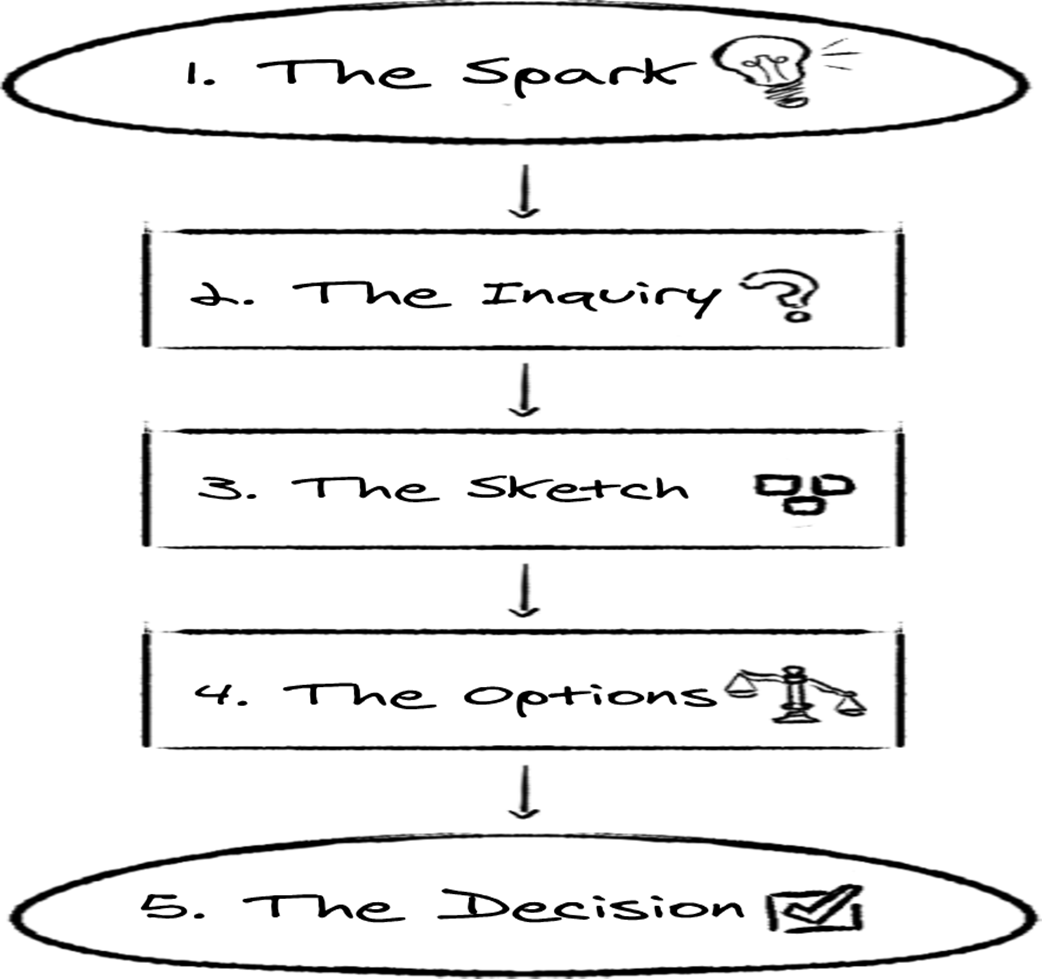
The chapter’s core method for architectural thinking is a five-step process that turns vague requests into defensible decisions. First, identify the request clearly; then investigate the real reason behind it by asking “why” repeatedly until the root need is uncovered. Next, sketch a simple separation of concerns so the main parts of the system stay cleanly divided. After that, compare realistic implementation options and make the tradeoffs explicit, rather than pretending one choice is perfect. Finally, document the decision, the rationale, and the consequences so the team has a shared record of why the system was shaped that way. This process is paired with the mindset of becoming a “Clarity Engineer”: someone who asks the right questions, uncovers unstated requirements, and turns ambiguity into action.
To ground these ideas, the chapter uses a real-world style example of deciding how to build a feature quickly versus building it in a more scalable and maintainable way. It explains technical debt as the cost of short-term shortcuts and warns against both extremes: blindly taking the fastest path and over-engineering for hypothetical futures. The Friendster story shows why architectural tradeoffs matter at scale, illustrating how prioritizing perfect consistency at the expense of performance and availability can doom a product. The chapter closes by emphasizing that this book will help readers learn how to think, build, and communicate like architects through practical, language-agnostic techniques, with the larger goal of making better decisions in both new and legacy systems.
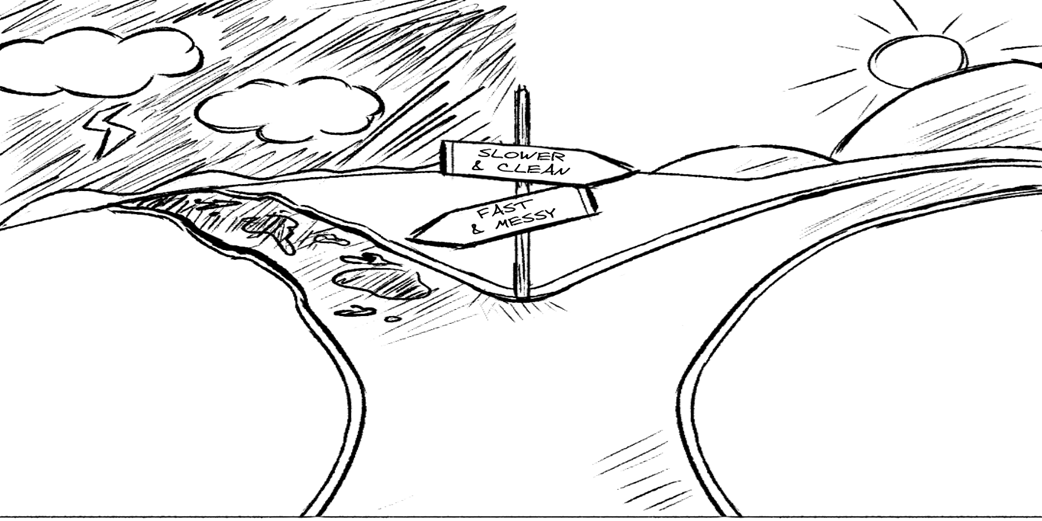
An architect constantly faces a choice between the fast, messy path (Option A) and the slower, cleaner path (Option B). Making a deliberate, defensible decision is a core architectural skill.
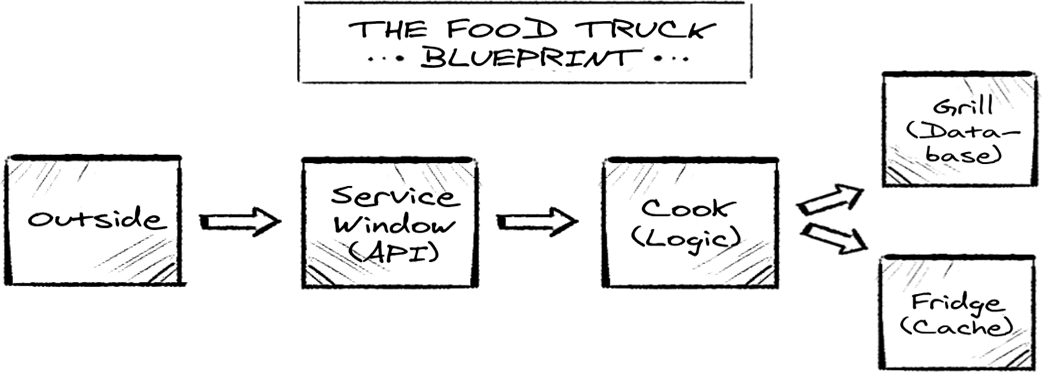
A software system, like a food truck, has a distinct structure. The API is the service window, the business logic is the cook, and dependencies like the database and cache are the grill and fridge.
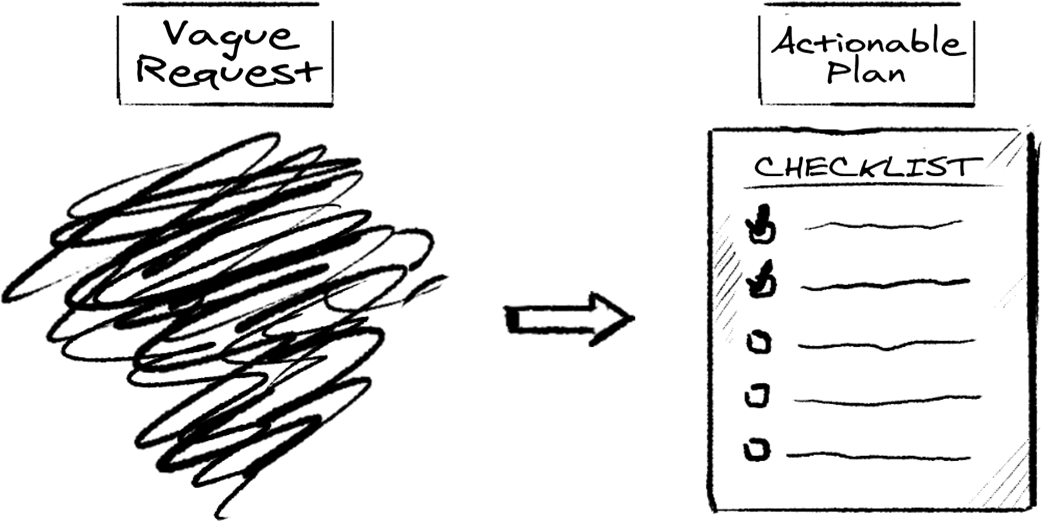
The role of a Clarity Engineer is to turn a vague, messy request (like "Make it faster!") into a clear, actionable plan.
This five-step Architectural Thinking Process shows how the architect goes from a vague request to a defensible plan. It starts with the initial spark (#1), moves to inquiry to find the "Why" (#2), leads to a simple sketch (#3), explores tradeoffs between options (#4), and ends with a documented, defensible decision (#5).
Sketching things out on a whiteboard or piece of paper helps you visualize things more clearly.
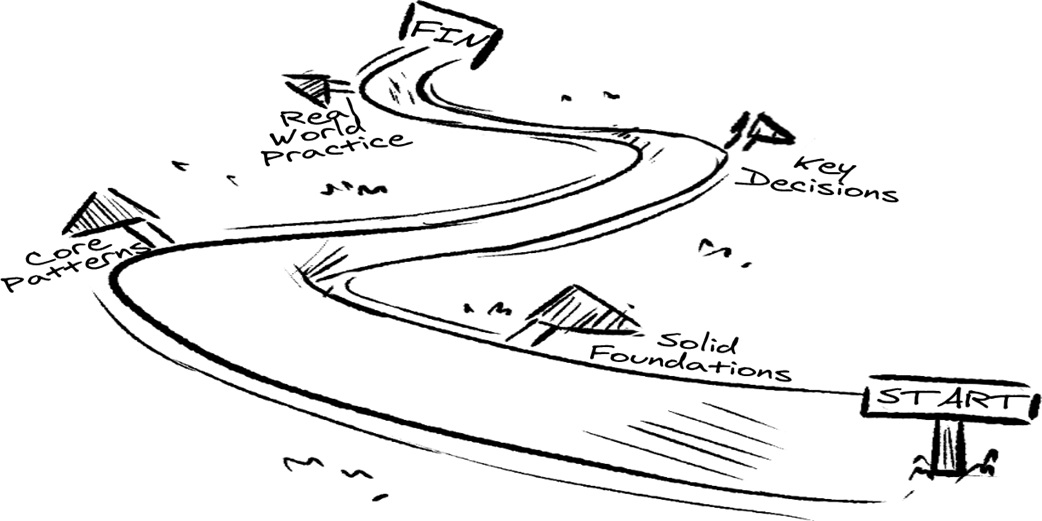
This book will equip you with a range of skills, from foundational concepts like making tradeoffs to practical applications like deploying to the cloud and communicating your designs.
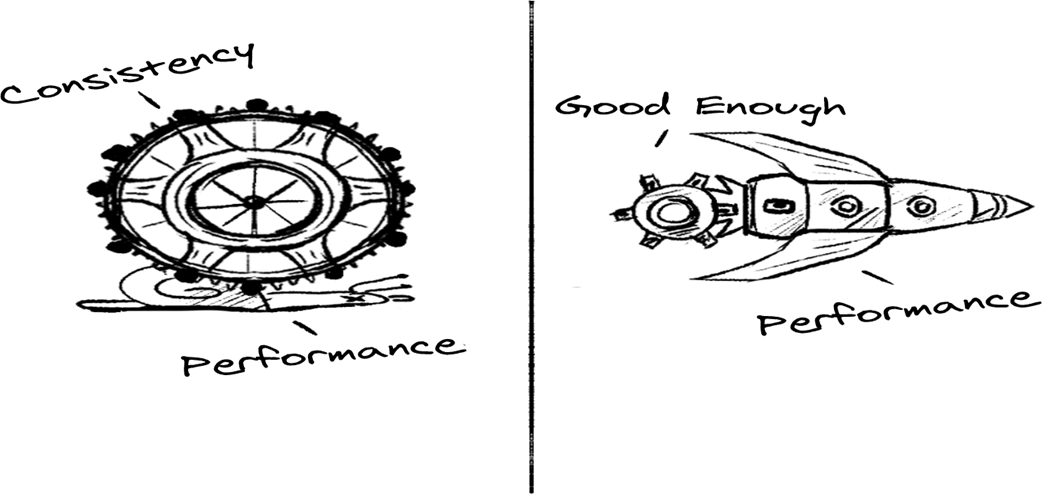
Friendster's choice to prioritize perfect Consistency resulted in a slow, unusable site, while competitors that prioritized Performance and Availability won over frustrated users.
Recap
- The "Three A's of Architecture" are: Awareness, Alignment, and Accountability.
- Even if you do not yet have Architectural Accountability, you should always have Architectural Awareness and put that into practice through Architectural Alignment.
- Architecture is the set of meaningful choices and the reasons for them, not just diagrams.
- Every significant decision involves a tradeoff, often between short-term speed (shipping now) and long-term quality (ease of change).
- Becoming a "Clarity Engineer" by asking "Why?" and discovering unstated requirements is the first step to becoming a great architect.
- The Architectural Thinking Process provides a simple, repeatable 5-step approach (Spark → Inquiry → Sketch → Options → Decision) to turn vague ideas into a complete 'receipt for a decision' that documents not just the final choice, but also the rationale behind it and the consequences that follow.
- There is no "perfect" architecture; the goal is to pick your pain on purpose by making deliberate choices.
- Optimizing for the wrong quality (like Friendster's choice of perfect Consistency over Availability) can lead to failure, even if the engineering is brilliant.
- Good architecture considers not just the system's structure, but also its behavior under stress and its ability to evolve over time.

 Grokking Software Architecture ebook for free
