Overview

1 Why Lean, why now?

The chapter argues that modern software development has outgrown the delivery systems built to manage it. Even with powerful toolchains and AI-assisted coding, teams still face long lead times, defects, rework, and friction because the real problem is not coding speed but the way work moves through the system. Lean is presented as a practical, developer-centered way to focus on value, expose waste, and improve flow across design, coding, testing, and deployment.

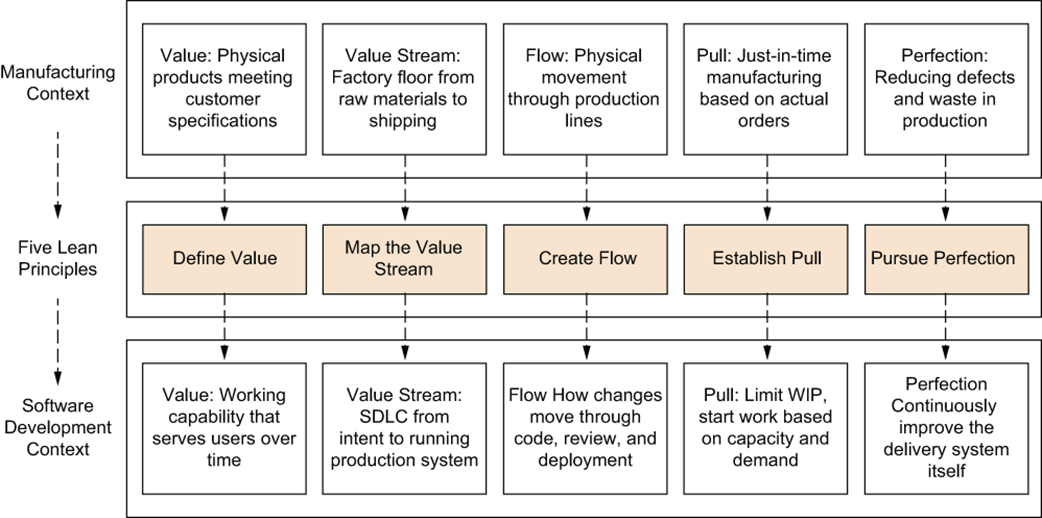
It explains Lean as a systems discipline, not a management ritual, and translates its classic principles into software terms: value, value stream, flow, pull, and continuous improvement. In code, value means durable capability in production, not just working features; the value stream is the path from idea to running software; flow is how smoothly work moves; pull limits work to real demand and capacity; and improvement means learning from defects, delays, and incidents. The chapter emphasizes that these ideas help teams build quality in early rather than discovering problems late in review or production.

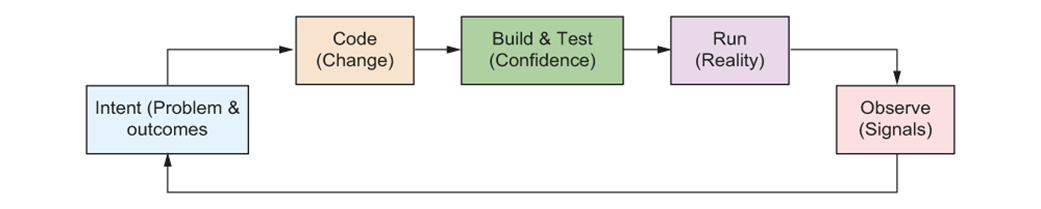
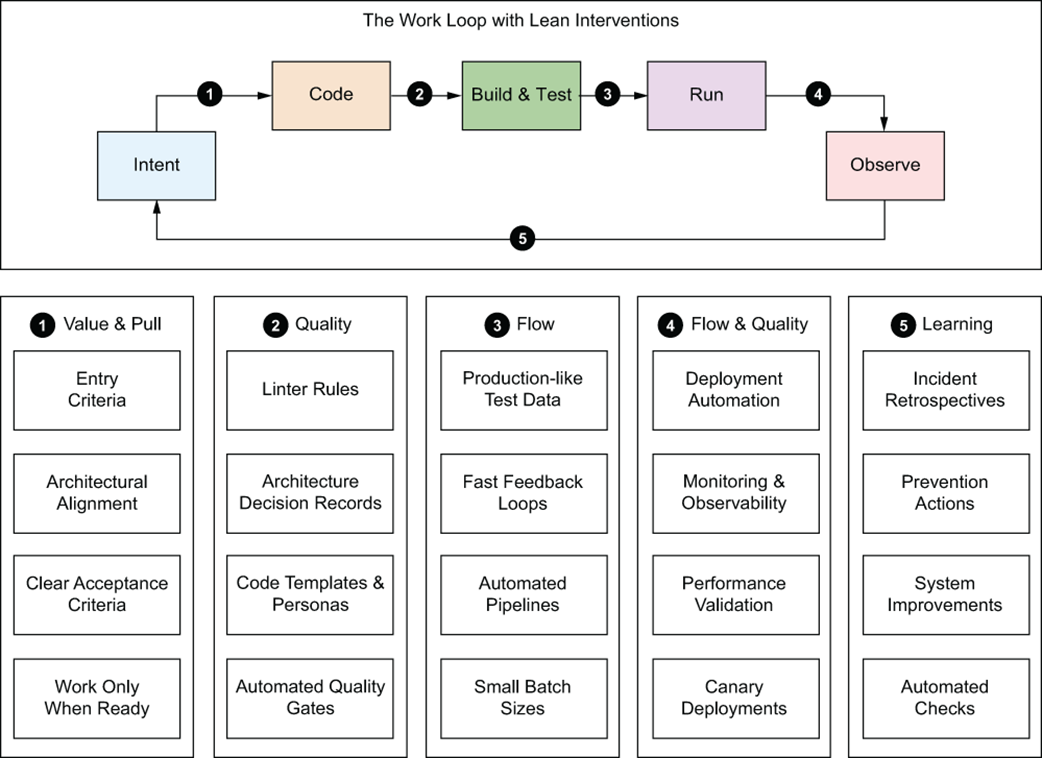
Using several realistic scenarios, the chapter shows how delayed feedback and hidden constraints create waste, even when everyone is working hard. AI can accelerate code creation, but it does not remove queues, unclear intent, missing standards, or production risks. A simple delivery loop is introduced to make these bottlenecks visible and to show where Lean interventions can help, such as clarifying requirements, encoding architectural constraints, testing against production-like data, and learning from incidents. The overall message is that better outcomes come from improving the whole system of delivery, not merely speeding up individual tasks.

Mapping the manufacturing context to the software context for the five Lean principles.
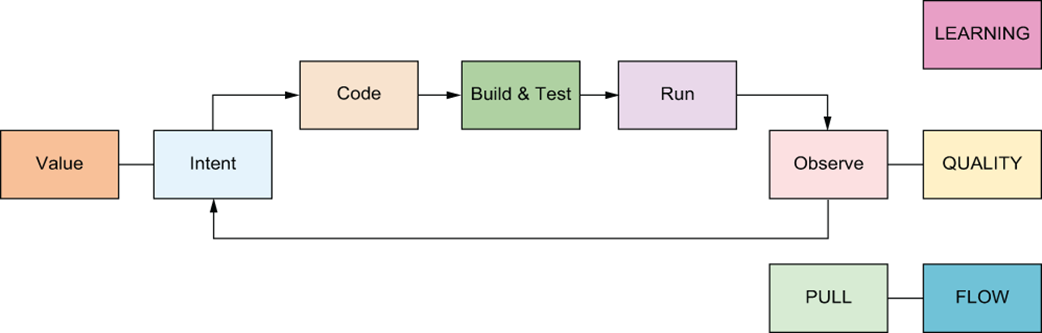
Simplified SDLC model showing the progression from intention to production.
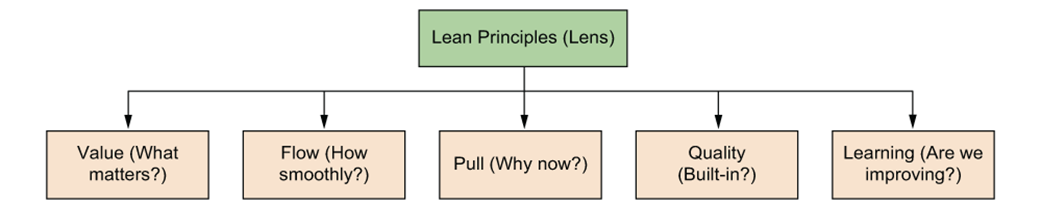
Five developer-centric Lean lenses, Value, Flow, Pull, Quality, and Learning, used to evaluate and improve software delivery.
Work loop with Lean interventions, addressing specific failure modes from the notification preferences scenario.
The holistic Lean model: five Lean principles surround and influence every phase of the work loop.

Summary

  • Modern software teams face persistent friction despite powerful tools and automation.
  • AI-assisted development increases speed, but also amplifies systemic constraints and hidden waste.
  • Most delivery slowdowns are caused by system-level issues, not individual skill or effort.
  • Software delivery is a continuous loop of intent, execution, validation, and feedback.
  • Lean provides a developer-centric way to reason about value, flow, delay, and rework.
  • Lean focuses on improving the system around the code, not just the code itself.
  • A shared mental model of the delivery system enables clearer judgment, faster learning, and more reliable outcomes.

FAQ

Why doesn’t faster code generation automatically mean faster software delivery?Even if AI or automation makes coding itself much faster, the overall delivery system can still be slowed by reviews, unclear requirements, testing gaps, staging issues, and production risks. Lean focuses on the whole flow from intent to running software, not just on code production.
What is the main problem with modern software delivery according to this chapter?The main problem is that delivery systems are poorly understood and not designed for today’s speed and complexity. Teams often create code quickly but still experience long lead times, rework, defects, and process friction because the system around the code is the real constraint.
What does “waste” mean in Lean software development?Waste is any effort that consumes time, attention, or resources without creating value for the user. Examples include rework, delays, unused features, extra handoffs, dead code, and work that waits in queues.
How is Lean different from just following a process or set of ceremonies?Lean is a systems discipline focused on how work actually moves through people, tools, and code. It is not mainly a management framework or a ceremony checklist; it helps teams see and improve flow, value, and feedback where development happens.
How does Lean relate to Agile?Agile emphasizes iteration and adaptability, and it was influenced by Lean thinking. Lean complements Agile by making value, waste, and flow visible and by improving how work moves through the delivery system, rather than treating Agile only as a process to manage people.
What are the five Lean principles, and how do they apply to software?The five principles are value, value stream, flow, pull, and perfection. In software, they translate into focusing on user value, understanding the path from idea to running system, improving smooth movement of work, starting work based on real demand and capacity, and continuously improving the system.
Why does the chapter say “done” must be defined more carefully?Because work is not truly done when code merely compiles or passes initial tests. In software, “done” should include production behavior, maintainability, operability, performance, and sustainability so that problems are not discovered too late.
What lesson does the chapter draw from the notification preferences example?The lesson is that delays and defects usually come from system issues, not individual failure. The feature took too long because of unclear requirements, review queues, weak test environments, and a production performance issue, all of which could have been addressed by Lean practices earlier in the loop.
Why is making the delivery system visible so important?Because many bottlenecks in software are invisible until work is delayed, reworked, or deployed badly. Visibility helps teams identify where work waits, where feedback is late, and which constraints are causing waste so they can fix root causes instead of symptoms.
What should developers take away from this chapter?Developers should see software delivery as an interconnected system and use Lean to improve flow, quality, and learning. The chapter’s message is that progress depends less on writing code faster and more on improving how value moves from intent to outcome.

pro $24.99 per month

  • access to all Manning books, MEAPs, liveVideos, liveProjects, and audiobooks!
  • choose one free eBook per month to keep
  • exclusive 50% discount on all purchases
  • renews monthly, pause or cancel renewal anytime

lite $19.99 per month

  • access to all Manning books, including MEAPs!

team

5, 10 or 20 seats+ for your team - learn more


Close
choose your plan

team

monthly
annual
$49.99
$499.99
only $41.67 per month
  • five seats for your team
  • access to all Manning books, MEAPs, liveVideos, liveProjects, and audiobooks!
  • choose another free product every time you renew
  • choose twelve free products per year
  • exclusive 50% discount on all purchases
  • renews monthly, pause or cancel renewal anytime
  • renews annually, pause or cancel renewal anytime
  • Build High Value Software Systems Build High Value Software Systems ebook for free

Close
choose your plan

team

monthly
annual
$49.99
$499.99
only $41.67 per month
  • five seats for your team
  • access to all Manning books, MEAPs, liveVideos, liveProjects, and audiobooks!
  • choose another free product every time you renew
  • choose twelve free products per year
  • exclusive 50% discount on all purchases
  • renews monthly, pause or cancel renewal anytime
  • renews annually, pause or cancel renewal anytime
  • Build High Value Software Systems Build High Value Software Systems ebook for free